No. The only completed An-225 was destroyed in February 2022 during the Russian attack on Hostomel airfield near Kyiv, according to the Ukrainian government. Antonov states that a second airframe was started and never finished.



 Share

A cargo aircraft is any plane that carries goods, either a dedicated freighter with no passengers or the belly hold of a scheduled flight. Cargo travels on standardised pallets and containers called ULDs. By capacity, the largest freighter in commercial service is the Antonov An-124, which carries up to 150 tonnes, according to its Ukrainian manufacturer.
When your box leaves a pickup in São Paulo bound for Tokyo, nobody books a plane for it. It goes onto a pallet, the pallet goes into a hold, and the hold is shared with hundreds of other shipments. Knowing how that machine works helps you pack better, forecast cost and understand why some cargo stays on the ground.
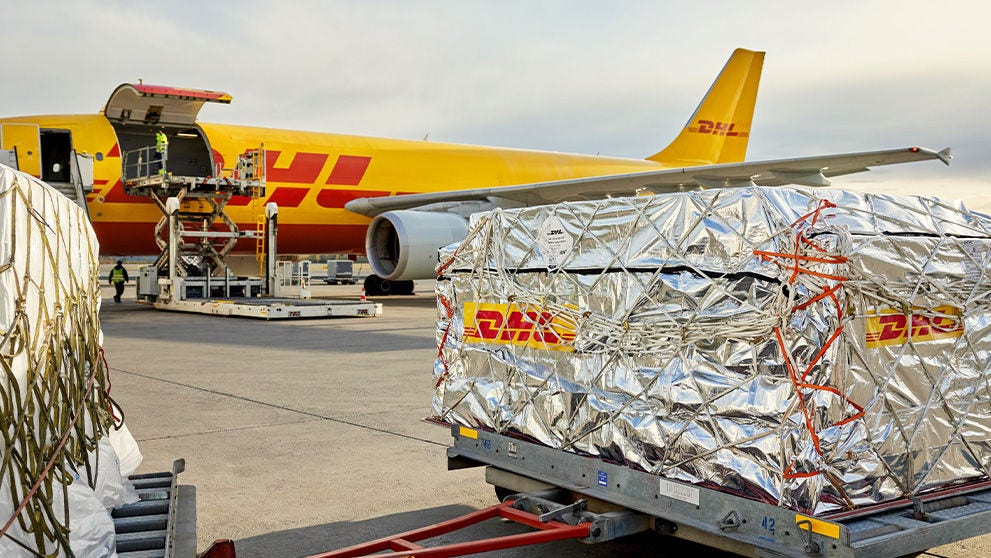
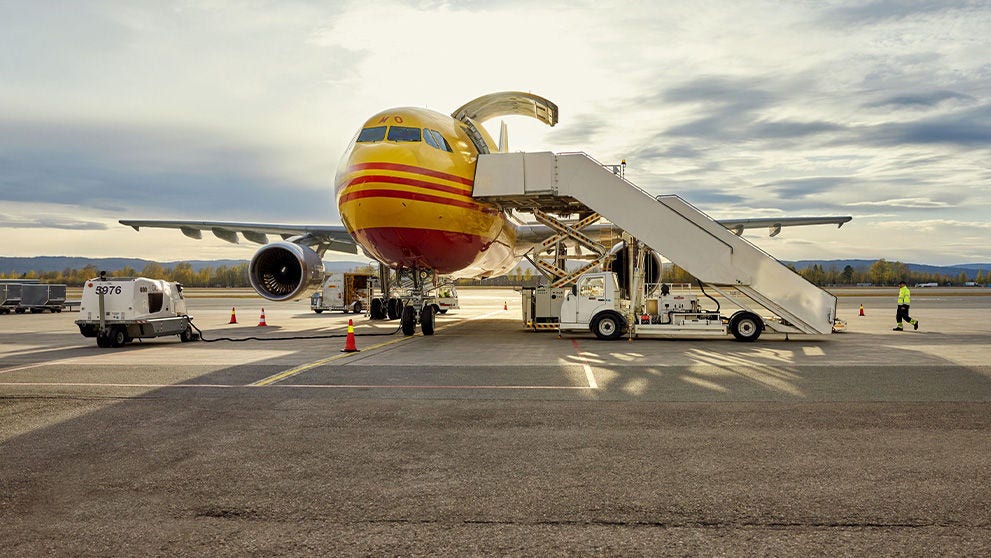
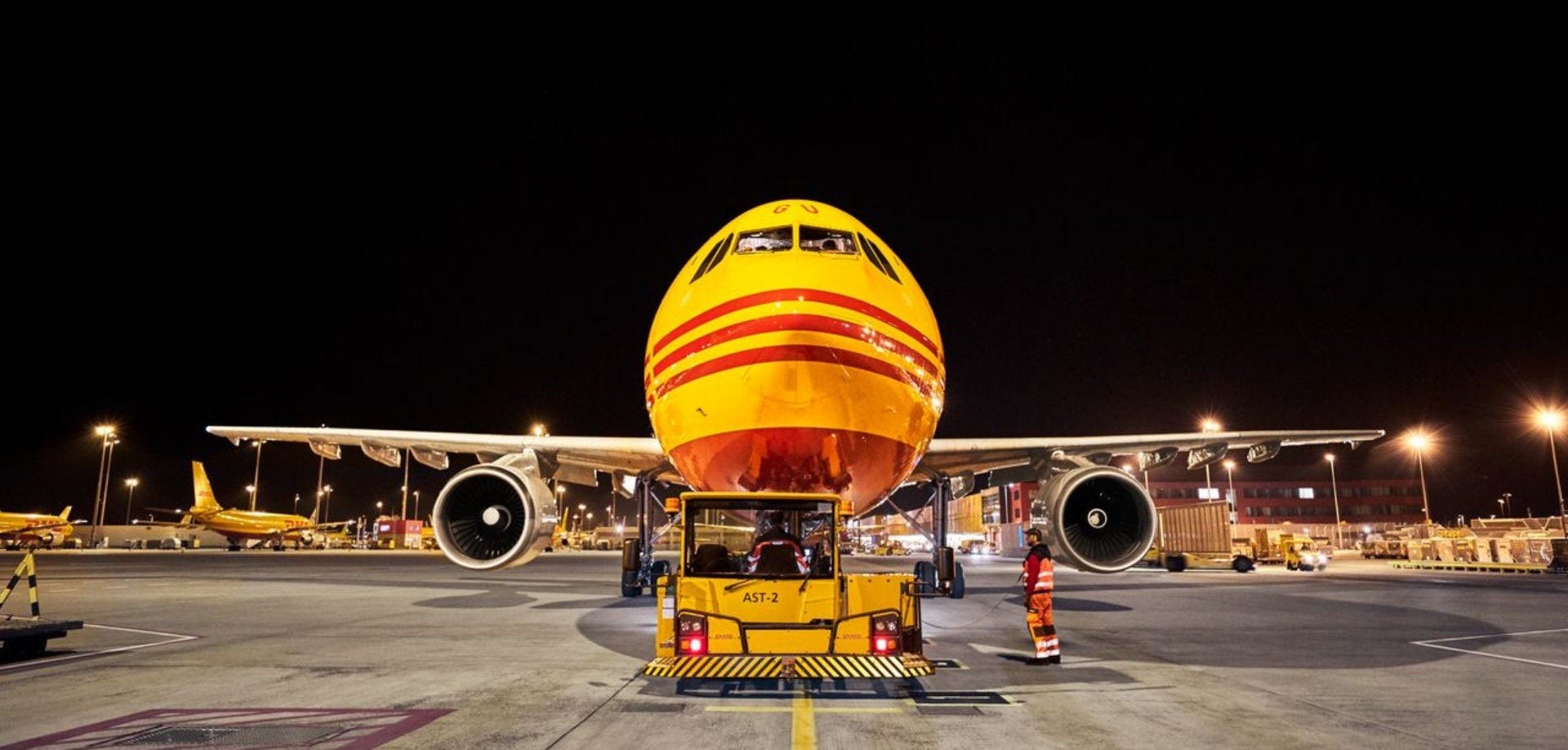
A freighter is an aircraft whose passenger cabin has been replaced by an open main deck, a roller floor, pallet locks and a wide cargo door, either on the side or in the nose. Below it sits the lower deck, the same hold that carries luggage on a passenger jet. The crew is minimal and the whole fuselage becomes cargo space.
Some freighters leave the factory that way. Others start life as passenger jets and are converted years later: Boeing, for example, offers converted versions of the 767-300 and 737-800 alongside its production freighters. Source: Boeing, October 2026.
The hold of passenger flights, known in the trade as "belly" capacity, also carries goods on every commercial route. The difference is control: on a passenger flight, cargo adapts to the timetable, the weight of the bags and the size of the door. On a freighter, the flight exists because of the cargo.
The largest cargo aircraft ever built was the Antonov An-225 Mriya, 84 metres long with an 88.4-metre wingspan. In 2004 it flew 247 tonnes of cargo from Prague to Tashkent and set six world records. Source: Antonov, October 2026.
The table compares the biggest freighters by what matters to shippers: how much weight they lift. Figures are those published by the manufacturers.
Cargo aircraft | Maximum payload | Standout figure | Status |
Antonov An-225 Mriya | 247 t carried on a record flight | 84 m long, 88.4 m wingspan | Out of service |
Antonov An-124 Ruslan | Up to 150 t | Record of 171 t lifted to 10,750 m | In commercial service (An-124-100) |
Boeing 747-8F | 140 t structural payload | Range above 8,185 km | In service |
Boeing 777-8F | 118 t structural payload | New generation announced by Boeing | In development |
Boeing 777F | 107 t structural payload | 9,260 km range and 27 main-deck pallets | In service |
Boeing 767-300F | 57 t structural payload | About 6,100 km range | In service |
The Mriya has a link to Brazil. In 2016 it carried a 155-tonne electric turbine, housed in a 27-tonne frame, from São Paulo to Santiago, Chile: a single 182-tonne load. Source: Antonov, October 2026.
In day-to-day trade, though, the world is carried by mid-size and large freighters such as the 777F and the 767-300F, flying scheduled routes every day. The Antonov giants take what fits nowhere else: turbines, generators, power plant parts.
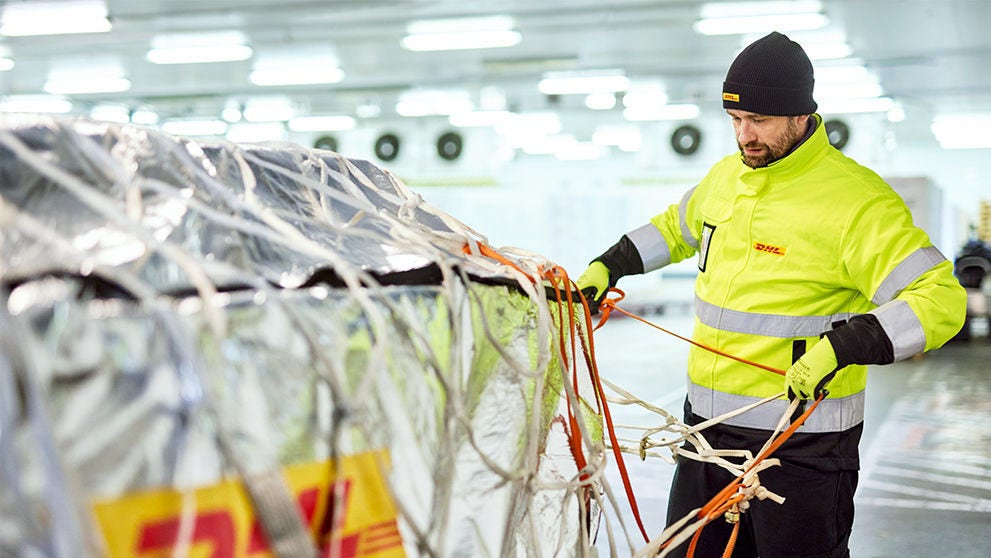
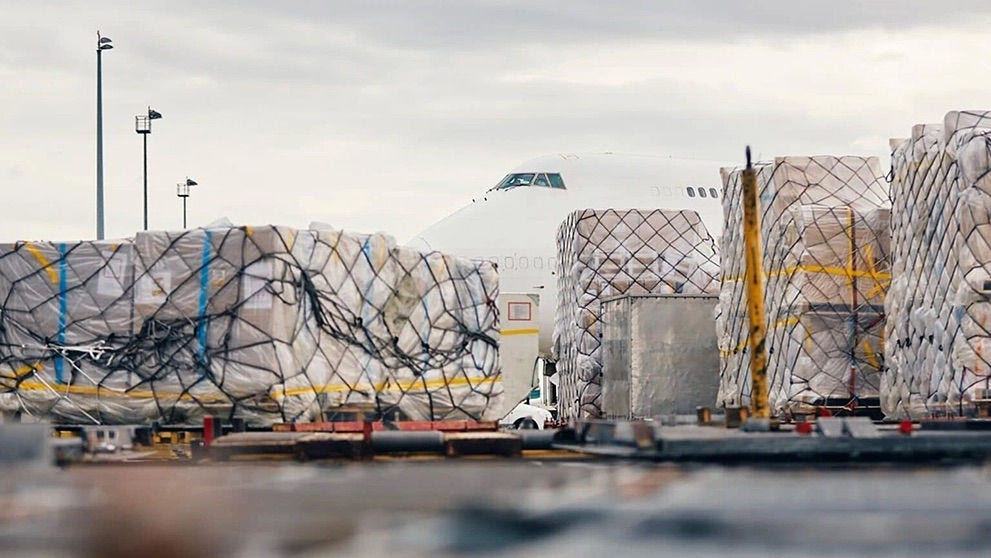
A ULD (unit load device) is the pallet with its restraint net, or the aircraft container, on which cargo is built up before loading. Under the definition of IATA, the airline industry association, it is an aircraft part: it must hold the cargo in flight and protect the airframe.
IATA estimates about 1 million ULDs in service worldwide, with a replacement value above USD 1 billion. Source: IATA, October 2026. Each type has its own contour, which follows the curve of the fuselage. That is why a box that is too tall may fit on a truck and still not fit on a lower-deck pallet.
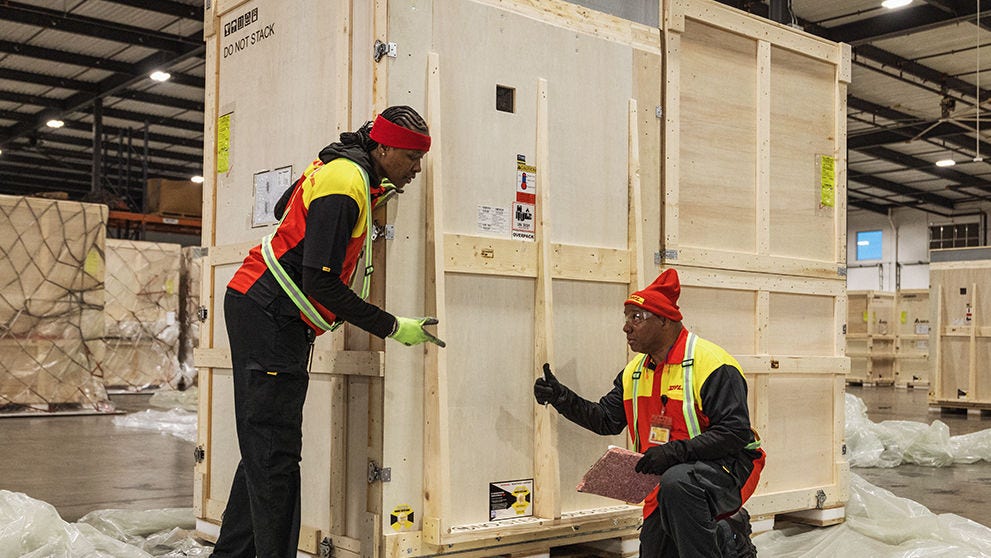
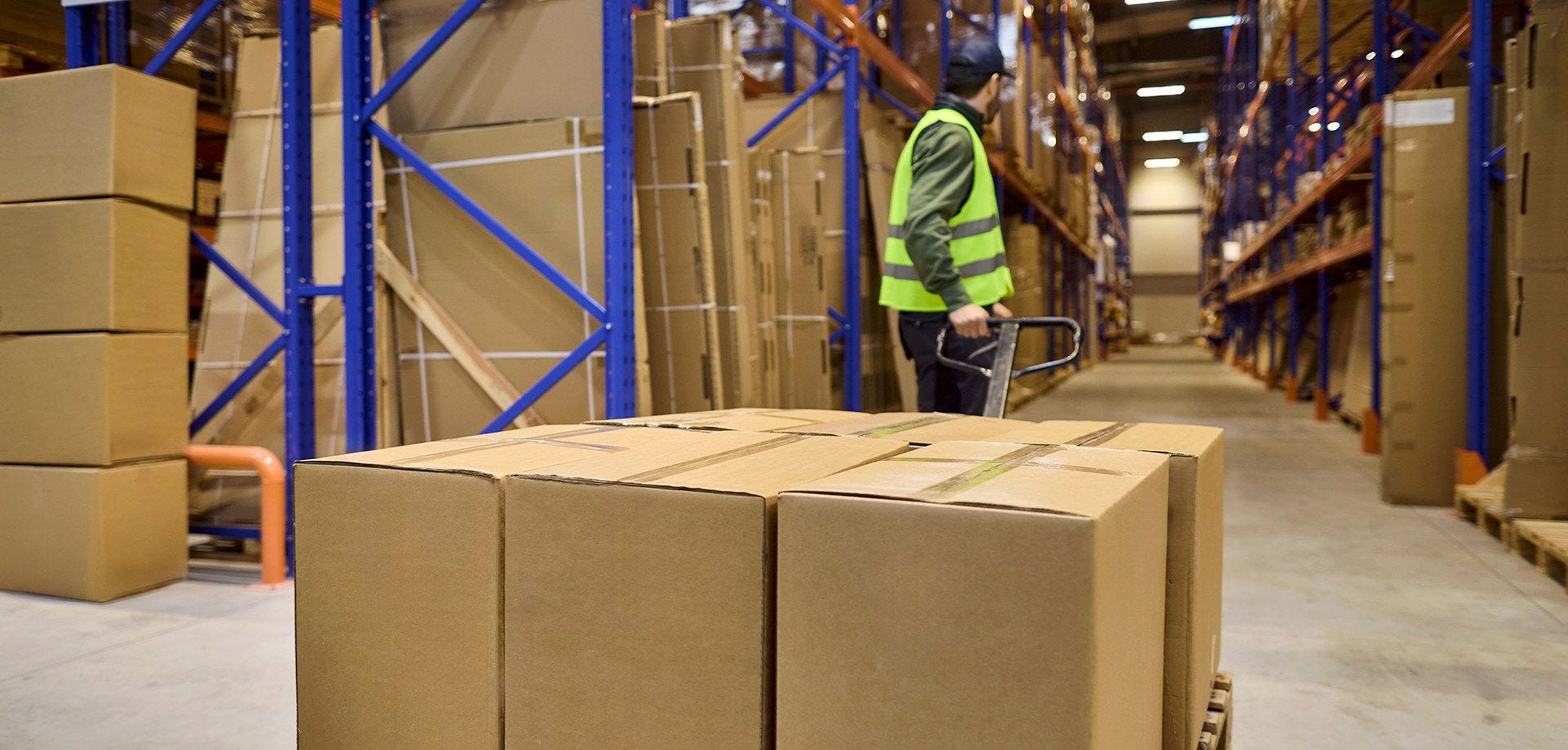
For shippers the lesson is practical. A well-palletised load, kept inside the pallet base with no overhang, goes into the ULD build-up without rework. The step-by-step is in the guide on how to palletise cargo in Brazil.
The limit is twofold: weight and volume. A large freighter rarely takes off at maximum weight when it carries light, bulky cargo, because the space runs out first. A load of pillows fills the deck with little weight. A load of engines does the opposite.
That is why air freight charges the greater of actual weight and volumetric weight, which converts volume into kilos. The formula and the tweaks that lower chargeable weight are in the guide to volumetric weight in Brazil.
Other limits appear before the flight: the size of the cargo door, floor strength per square metre and the rules for dangerous goods, which only fly when classified, packed and declared. The full air shipment process, from booking to delivery, is in the guide to air cargo transport in Brazil.
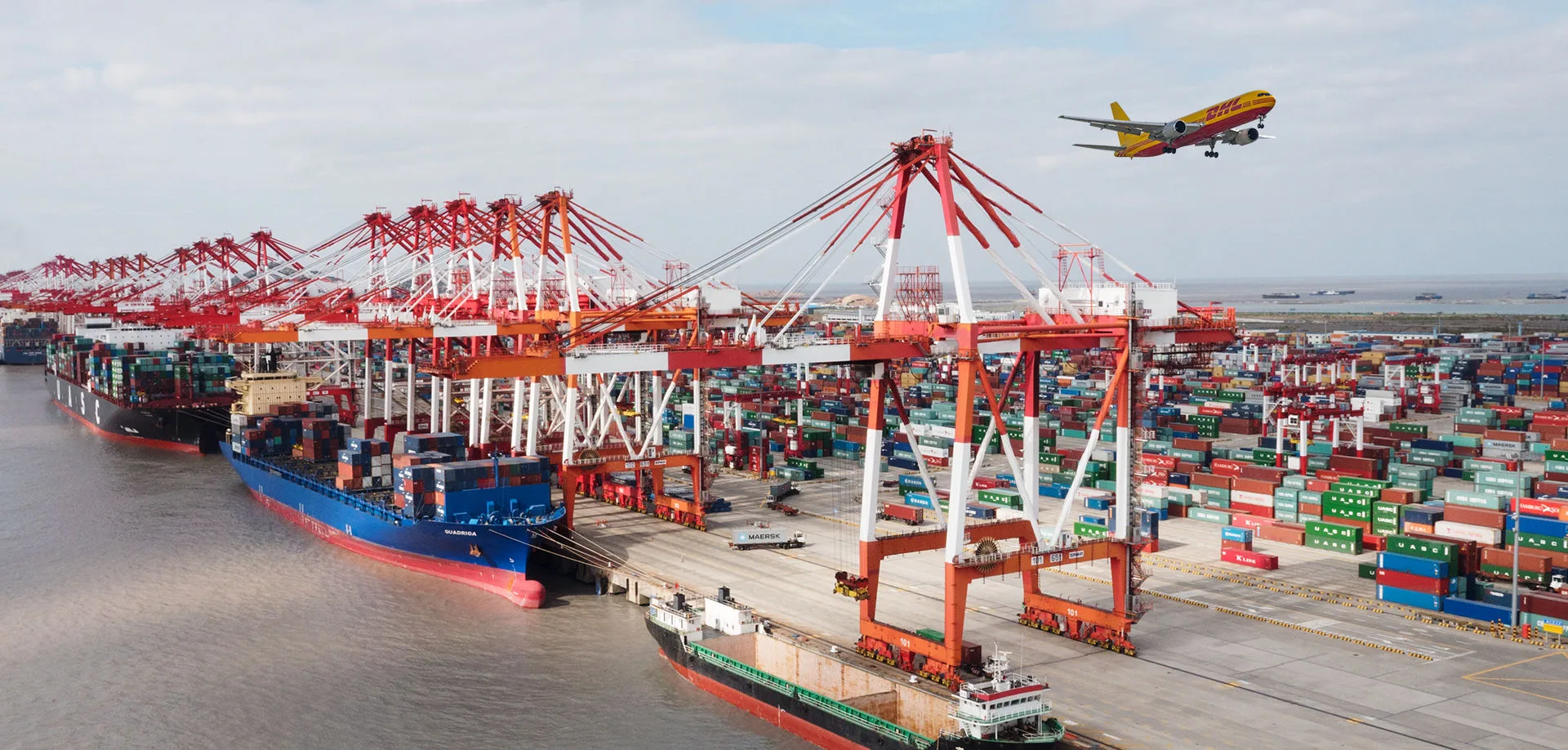
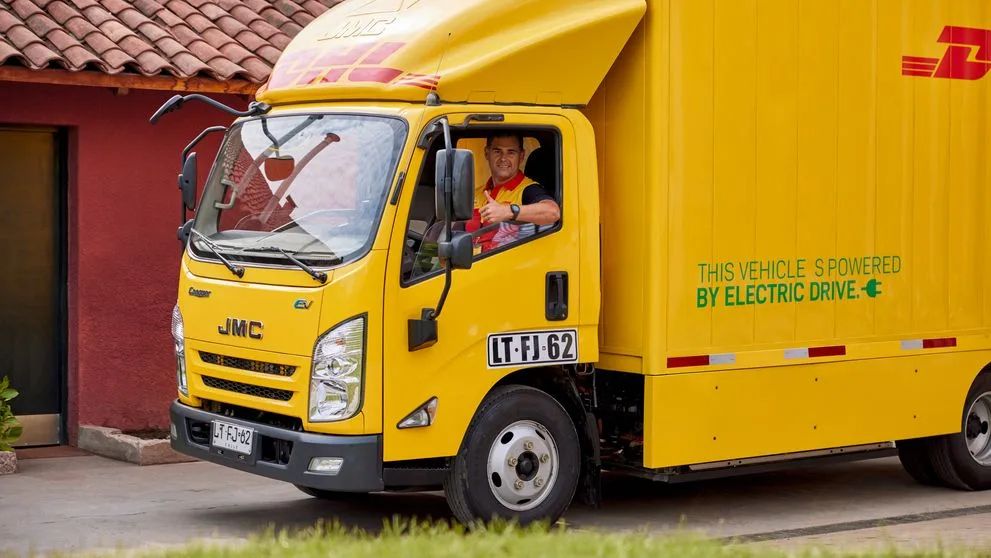
An express network blends its own aircraft, from airlines it controls, with space bought from other carriers, adjusting capacity to each day's volume. DHL Express reports more than 275 dedicated aircraft, operated by in-house airlines, some majority-owned by the group, and partners, serving more than 220 countries and territories. Source: DHL Group, October 2026.
The design is hub-based. Shipments from each region converge on a sorting centre, change aircraft and fly on to destination. DHL names three global hubs: Leipzig in Germany, the largest in the network and running since 2008, Hong Kong and Cincinnati in the United States. In Leipzig a shipment takes on average two hours to be unloaded, re-sorted and loaded again. Source: DHL, October 2026.
Spare capacity on the network's own flights is sold as general air cargo. That is how an express freighter can fly full on every leg of a route, not just the busiest one.
It changes how you prepare the shipment. Three habits prevent most problems:
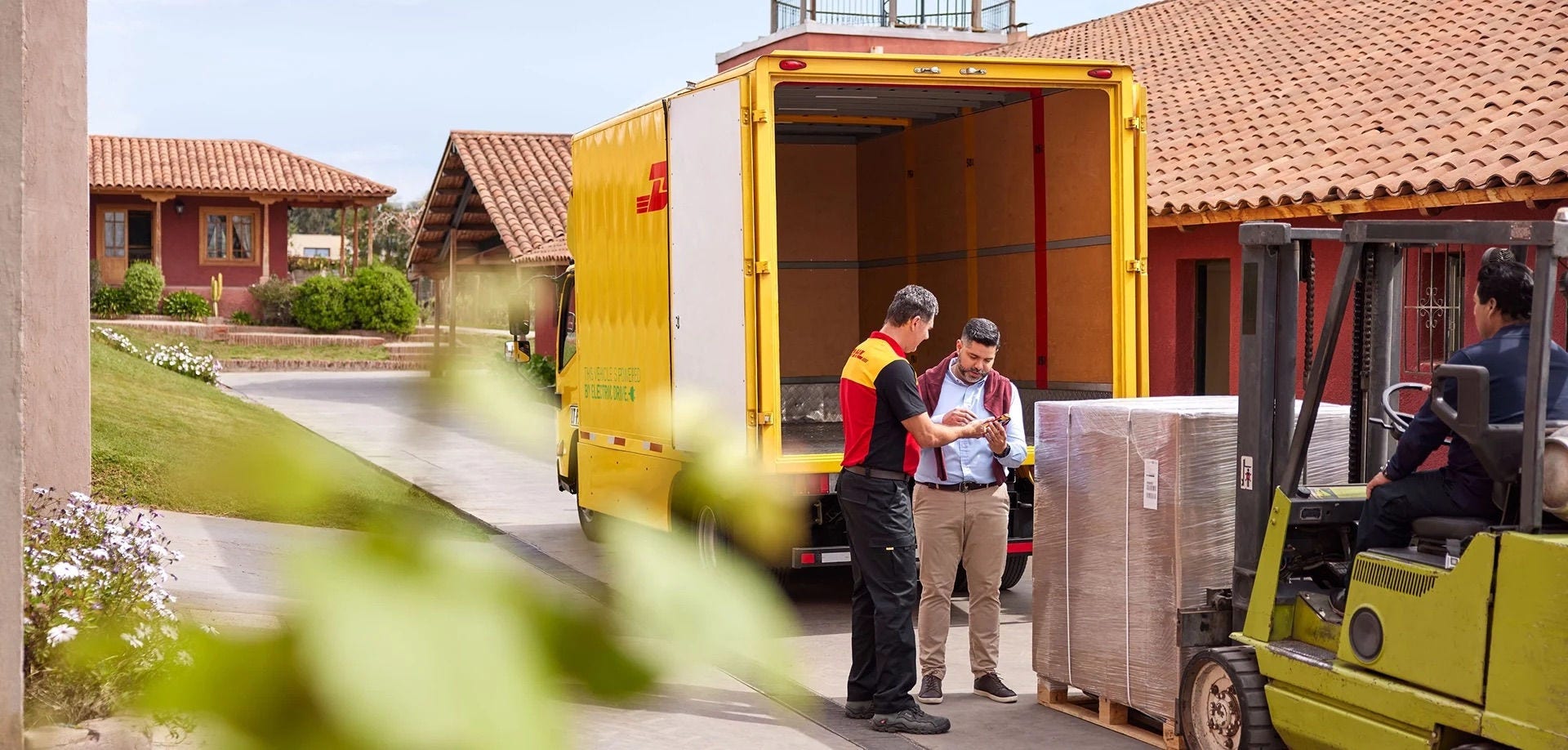
For loads from 50 kg to 3,000 kg, express also works, with palletised pieces of up to 1,000 kg, according to the service material published by DHL Express in 2026. Details are in the guide to Heavy Weight Express in Brazil.
No. The only completed An-225 was destroyed in February 2022 during the Russian attack on Hostomel airfield near Kyiv, according to the Ukrainian government. Antonov states that a second airframe was started and never finished.
Because express networks rely on the so-called night jump: shipments picked up at the end of the day are sorted at hubs overnight for next-day delivery, and an express hub needs round-the-clock operation to make that work, according to DHL.
That is not how it works. Small packages go into a courier network or a forwarder's consolidated load, which splits the aircraft space among different customers; chartering a whole aircraft only pays for cargo that fills it.
No. Brazil's import tax rules do not change with the transport mode; what changes is the freight and insurance amount, which is part of the customs value on which taxes are calculated.
If your business sends samples, parts or palletised batches out of Brazil, or receives them from abroad, the shortest route is direct access to an express air network. Open a DHL Express business account and quote your next shipment with pickup, flight, clearance and delivery in a single service.
Share